Skin Care
What Is Actinic Keratosis & The right way to Assist Shield Your self

Jul
{Golfing}. Gardening. Strolling alongside the seaside. A lot of our favourite moments happen underneath the solar. However whereas recollections could fade, your pores and skin doesn’t neglect—and each second of unprotected solar publicity provides up.
Over time, this publicity could cause what dermatologists name actinically-damaged pores and skin—seen indicators of UV-induced harm that will result in precancerous pores and skin lesions generally known as actinic keratoses (AKs). And with over 58 million instances within the U.S., it’s one of the frequent pores and skin situations in adults.
So, what does actinic keratosis seem like? And how are you going to assist defend your pores and skin? With steering from professional dermatologists, we’ll discover the causes, look, prevention, and remedy of AKs.
Dr. Susana Puig
World-renowned dermatologist within the area of analysis and remedy of melanoma and pores and skin most cancers. Professor on the College of Barcelona.

Dr. Caroline Robinson
Chicago-based, board-certified medical and beauty dermatologist with subspecialty experience in alopecia, preventative skincare, and ethnic pores and skin dermatology.
What’s actinic keratosis or actinic harm?
Actinic keratosis—often known as photo voltaic keratosis—is a small, tough, typically scaly patch on the pores and skin brought on by cumulative solar publicity over time. Whereas AKs aren’t pores and skin most cancers themselves, they’re thought of precancerous lesions which have the potential to become squamous cell carcinoma (SCC), a typical kind of pores and skin most cancers.
Though more often than not they’re nothing to fret about, it’s estimated that round 10% of actinic keratoses can progress to pores and skin most cancers—making early detection and common visits together with your dermatologist important.
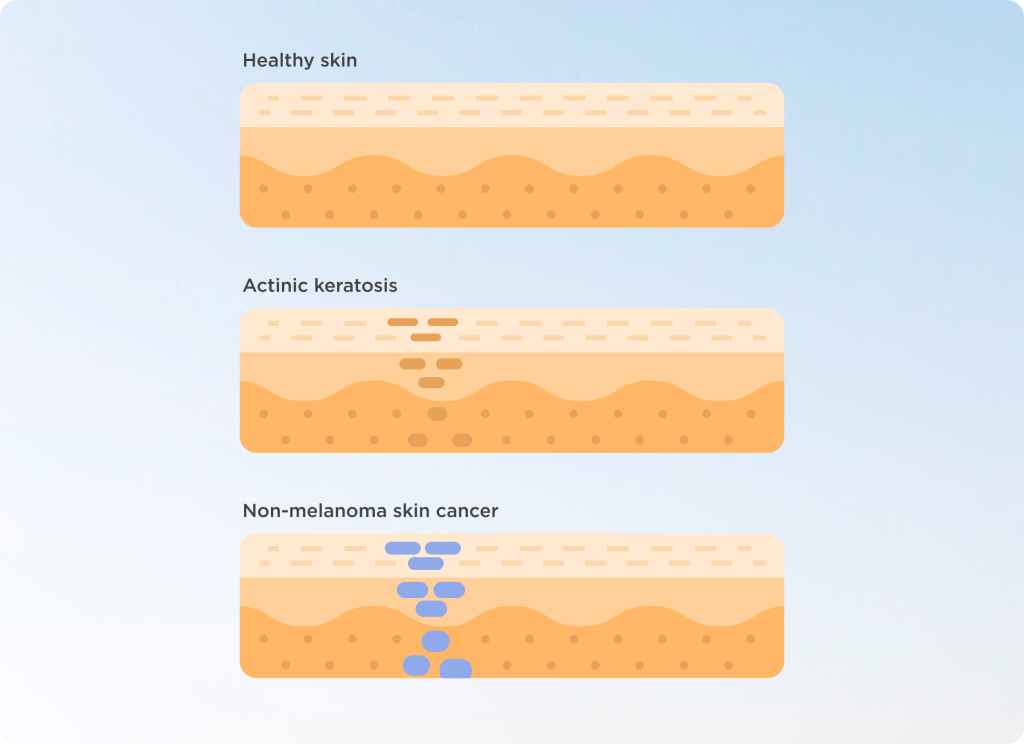
At the very least 90% of actinic keratoses are benign—which means they won’t flip into most cancers.
What causes actinic keratosis?
Brief reply: the solar. The primary offender is ultraviolet (UV) radiation—from spending time outdoor or synthetic sources like tanning beds. Repeated and unprotected publicity to UV gentle damages pores and skin cells over time, creating adjustments of their DNA. This cumulative hurt results in the formation of actinically broken pores and skin, which can seem as AKs.
Frequent threat elements embrace:
- Gentle pores and skin tones (Phototypes I–II)
- Lengthy hours outdoor (work or leisure)
- Historical past of sunburns, particularly in childhood
- Use of tanning beds
- Age over 40
In brief, anybody with a historical past of solar publicity—particularly with out every day solar safety—could develop AKs.
Professional tip: Whereas medical specialists have contributed to and fact-checked this text, there are many further sources of knowledge on actinic keratosis out there. Flip to those foundations for the newest data:
American Academy of Dermatology
Pores and skin Most cancers Basis
Yale Medication
What does actinic keratosis seem like?
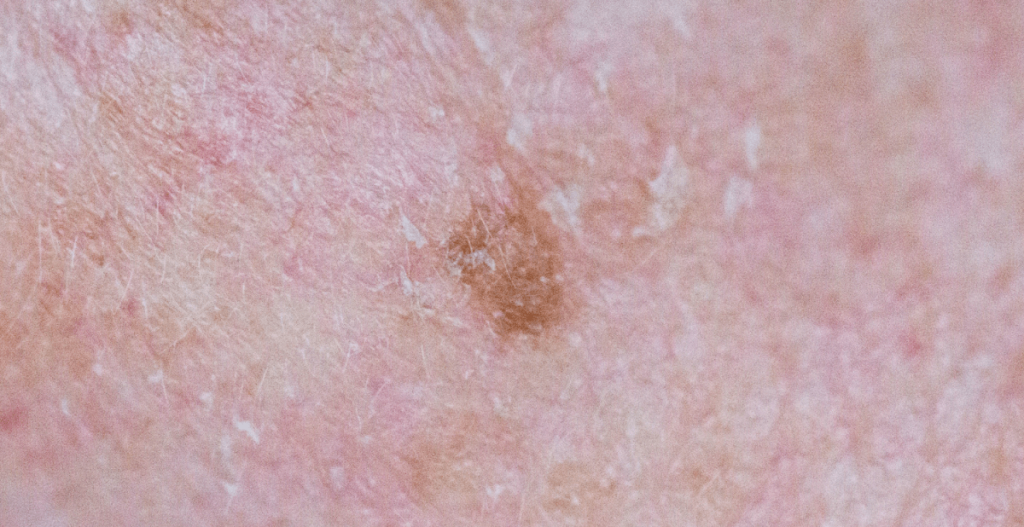
AKs may be straightforward to overlook. They have an inclination to start out off as a patch of tough or scaly pores and skin, with a pink or crimson shade. However take into account that they will current in another way in several individuals.
Right here’s what to observe for:
- Tough or scaly texture- Usually described as feeling like sandpaper. AKs can typically be mistaken for warts, solar spots, or dry patches—however their tough texture is commonly a giveaway.
- Colour variations- Patches could also be pink, crimson, brown, or skin-toned.
- Measurement and shape- Usually small (lower than 2.5 cm), flat, or barely raised.
- Persistent dry spots- Particularly people who don’t heal or flake repeatedly-
And the place to look:
- Face and scalp- AKs ceaselessly seem on the face and bald scalp, two areas typically uncovered to daylight.
- Backs of the hands- Fixed solar publicity makes this one other high-risk space.
- Lips- A white, cracked, or scaly patch on the decrease lip could level to a type of AK.
In the event you discover any of those indicators—particularly in areas with frequent solar publicity—it’s a good suggestion to schedule a checkup together with your dermatologist.
How can I assist forestall actinic keratosis?
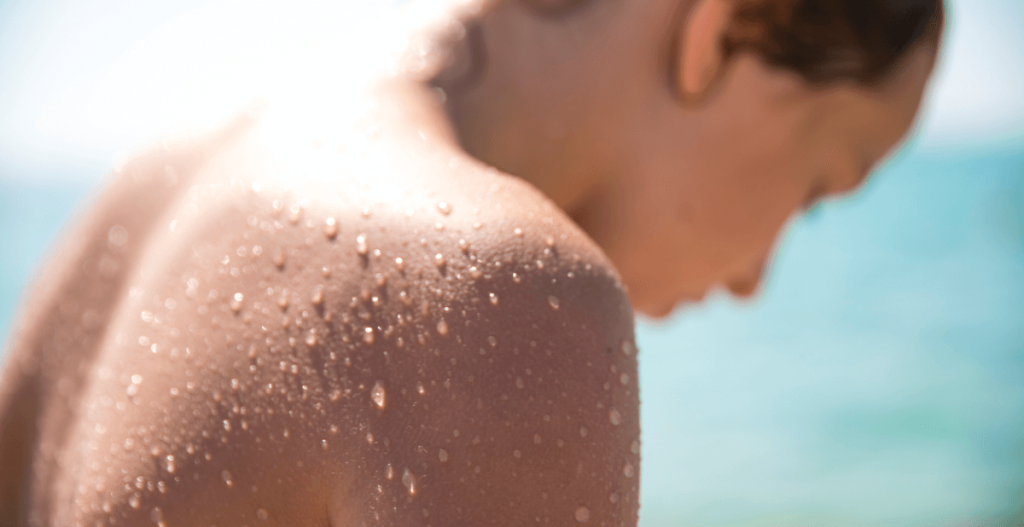
Step 1: Use solar safety on daily basis
Right here’s the excellent news: you’ll be able to take confirmed steps to scale back your threat. Dr. Puig confirms, “Every day solar safety helps reduce the chance of pores and skin harm and most cancers.” And it’s so simple as following a couple of straightforward solar security ideas:
- Apply a broad-spectrum sunscreen with SPF 30 or larger every day—sure, even when it’s cloudy
- Reapply a minimum of each 2 hours, particularly after swimming or sweating
- Put on hats, sun shades, and protecting clothes when doable
- Do your greatest to keep away from peak solar hours (normally 10 AM–4 PM)
Professional tip: Dr. Puig echoes the significance of making use of sunscreen the proper approach, “We should apply a enough quantity of product and distribute it accurately.” Meaning paying additional consideration to these easy-to-miss and AK-vulnerable spots like your ears, nostril, and backs of your palms.
Go for sunscreens that do extra
Sunscreen is your first line of protection—however sure formulation do extra. Dr. Weisert recommends Eryfotona Actinica and Eryfotona Ageless that includes DNA Repairsomes® to assist defend pores and skin and restore previous harm. “[They’re] 100% mineral-based sunscreens which are dermatologist examined,” she shares.
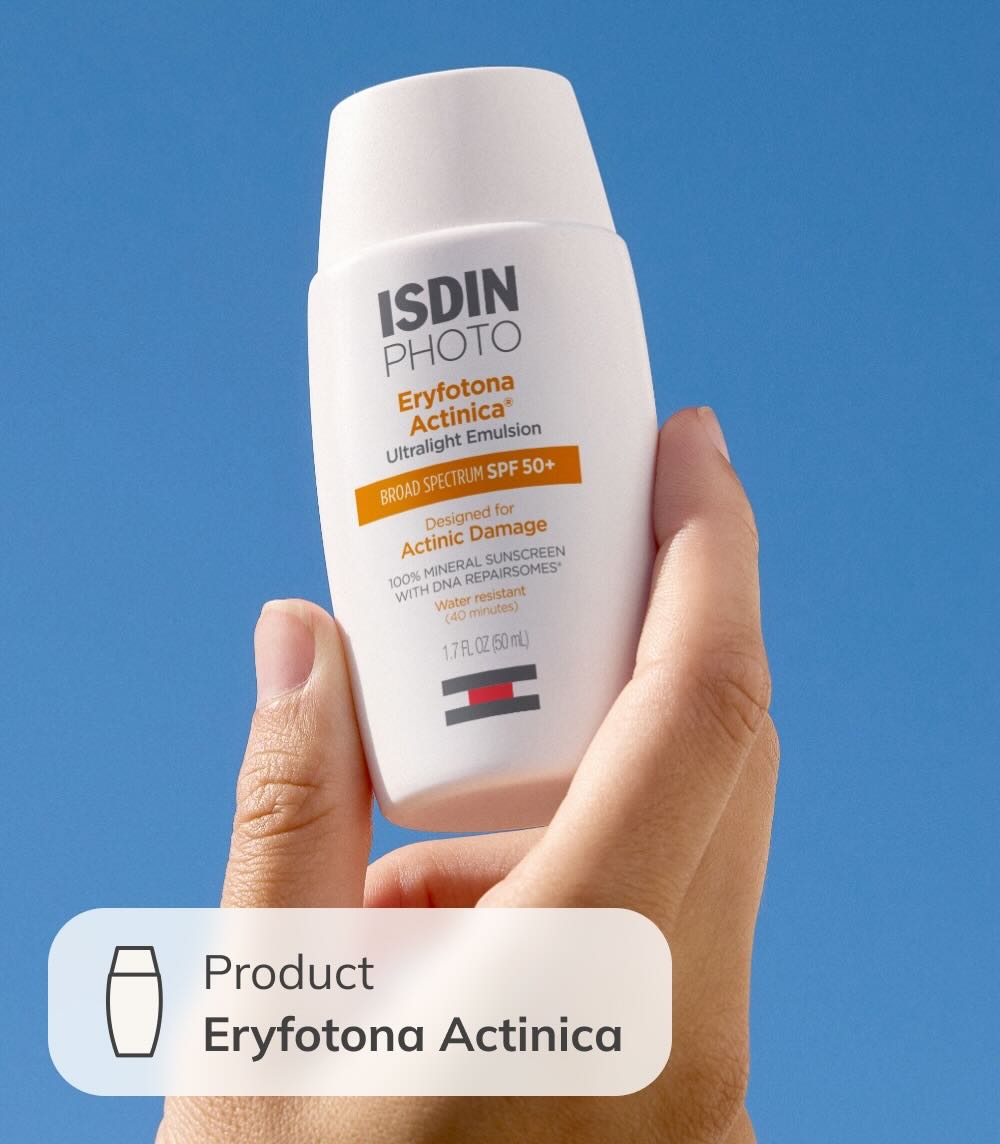
However the formulation isn’t the one factor that issues. Dr. Weisert continues, “I at all times inform my sufferers that the perfect sunscreen is one which they’re truly going to put on.” Constant use is vital, and an easy-to-wear texture could make all of the distinction. “What I like concerning the Eryfotona line is that they’re ultra-lightweight and apply seamlessly onto the pores and skin.”
“Each Eryfotona Actinica and Eryfotona Ageless include DNA Repairsomes®, which assist to restore present solar harm.”
– Dr. Elise Weisert
Step 2: Carry out common pores and skin self-exams
Whereas self-exams can’t diagnose actinic keratosis or exchange your yearly go to to the dermatologist, they might help you be proactive.
Right here’s what to search for:
- Persistent redness or dryness in sun-exposed areas
- New tough patches or scaly areas
- Spots that change in form, measurement, or shade
Professional tip: Take notes or photos in your cellphone to trace any adjustments. That approach, you’ll be higher ready to debate any issues together with your dermatologist when your appointment comes round.
How do you deal with actinic keratosis?
Step one: get your dermatologist concerned. It’s a good suggestion for everybody to verify in with their dermatologist annually. Nevertheless, individuals with extra pores and skin most cancers threat elements may want extra frequent visits.
In the event you’re recognized with actinic keratosis at one among these checkups, relaxation assured that there are a number of remedy choices. The commonest embrace:
- Cryotherapy
- Topical remedies
- Photodynamic remedy (PDT)
- Laser remedy or curettage
One thing else to bear in mind: Even when your dermatologist treats seen lesions, AKs typically happen in clusters, and areas of invisible harm may additionally exist. That’s why ongoing solar safety and common pores and skin exams are so essential.
Take heed to your pores and skin

AKs are frequent—however they’re additionally preventable and treatable. Probably the most highly effective factor you are able to do? Hold paying consideration. Your pores and skin offers you indicators. And once you defend, study, and nourish it on daily basis, you’re giving it the care it deserves.
Keep in mind these three necessities:
- Use sunscreen every day (rain or shine)
- Carry out self-checks ceaselessly
- Go to your dermatologist yearly
Shield what protects you. As a result of your pores and skin remembers all of it—as we speak, tomorrow, and yesterday.
References:
1 Actinic Keratosis (AK). (2022). Yale Medication. https://www.yalemedicine.org/situations/actinic-keratosis
2 The Pores and skin Most cancers Basis. (2023, March 6). Squamous Cell Carcinoma - The Pores and skin Most cancers Basis. https://www.skincancer.org/skin-cancer-information/squamous-cell-carcinoma/
3 Venosa, A. (2022). Is Actinic Keratosis Pores and skin Most cancers? What You Must Know About this Frequent Situation. The Pores and skin Most cancers Basis. https://www.skincancer.org/weblog/is-actinic-keratosis-skin-cancer/

Editorial Workforce
Our namesake embodies the spirit of embracing life and all its marvel. As wellness journalists, we discover matters that invigorate the senses and preserve curiosity alive. We consider that glowing pores and skin is the results of a wholesome physique and thoughts. Weaving magnificence with science, we purpose to encourage you to stay younger at all ages.