Health & Wellness
The 13 Deaths of Dr. Oosterhoff

Mar
Dr. Menno Oosterhoff leaned ahead in his living-room chair, took a sip from his espresso mug, and instructed me concerning the first time he ended a affected person’s life.
She was 18 years previous and had been identified with obsessive-compulsive dysfunction, an consuming dysfunction, and autism. Regardless of years of remedy, she was nonetheless bedeviled by damaging ideas, and she or he instructed Oosterhoff, a specialist in baby and adolescent psychiatry within the Netherlands, that she couldn’t stand any extra struggling. He recommended deep mind stimulation, an invasive process typically used to deal with extreme OCD. She insisted that she wished assist dying as an alternative.
Dutch regulation gave Oosterhoff the facility to grant her request. In 2002, the Netherlands started permitting medical doctors to manage dying to sufferers who make “voluntary and effectively thought of” pleas to finish “insufferable” affected by any medical situation—offered there is no such thing as a “prospect of enchancment” and no “affordable different” to dying. Eighteen-year-olds are adults and might request euthanasia even over household objections. Kids as younger as 12 are additionally eligible, with parental consent; for 16- and 17-year-olds, solely parental session is required.
Oosterhoff’s affected person had no bodily sickness, deadly or in any other case; he concluded, moderately, that she was “mentally terminal.” An administered dying could be preferable, he thought, to extended struggling or the potential for unassisted suicide. To adjust to the regulation’s requirement of “due care,” he consulted one other psychiatrist and convened a “ethical case deliberation session.”
Telling me about his inside battle at that second, Oosterhoff’s beforehand informal tone turned extra intense. On the age of 70, he’s now not an adherent of the strict Dutch Calvinism he’d discovered as a toddler, however he stated he felt haunted by the thought of “remaining judgment” within the afterlife; his affected person’s request for euthanasia made him assume, God is testing me.
So Oosterhoff imagined a dialogue with God. If he didn’t assist the woman die, God would ask him why he had allowed her struggling to proceed. “I used to be anxious,” he would reply, however God would say, “I instructed you: You need to do what your conscience tells you.” If Oosterhoff did finish his affected person’s life, nonetheless, God would possibly reproach him for having acted with out realizing the entire penalties. In that case, he imagined telling God: “You didn’t make it clear sufficient. I did what I might.”
On the appointed day in October 2022, Oosterhoff went to the woman’s house and requested one final time whether or not she wished to die. When she stated sure, he injected her with a collection of chemical substances: first lidocaine to numb the realm the place the needle entered, then a coma-inducing drug, and eventually rocuronium, a muscle relaxer, to cease her respiration.
Afterward, a colleague requested Oosterhoff whether or not he nonetheless felt anxious concerning the remaining judgment. “No,” he replied. “If this isn’t good, then God ought to make a greater person handbook for our life.”
The proper to die by euthanasia is common within the Netherlands. It’s even some extent of nationwide delight. The nation has a convention of decriminalizing once-taboo behaviors, similar to prostitution and marijuana use, which permits them to be managed underneath the regulation. It’s a mirrored image of the excessive worth that Dutch tradition locations on particular person autonomy—the notion that “our ideas and beliefs are holy and shouldn’t be interfered with,” says Rosanne Hertzberger, a former member of Parliament from New Social Contract, a center-right get together. “Folks say, ‘Who’re you to inform me what to do, what to assume?’”
However whereas absolute prohibitions would possibly really feel oppressive, they can be helpful, as a result of they spare us the prices of constructing troublesome ethical selections—and the doubtless catastrophic dangers of getting them unsuitable. Looking for euthanasia for psychiatric causes is the grayest of grey areas. It’s very laborious to know whether or not a struggling particular person might get higher, and the will for dying generally is a symptom of the sickness itself. The choice to die is drastic and irreversible; ought to it actually be left as much as a teen whose mind continues to be growing, and who’s vulnerable to affect by friends and authority figures?
Now Dutch physicians, politicians, and journalists are starting to sound alarms. The overwhelming majority of physician-assisted deaths within the nation of 18 million nonetheless contain terminal bodily sickness—about 86 p.c of the 9,958 instances in 2024. However the quantity of people that acquired euthanasia solely on the grounds of psychological struggling spiked from 88 in 2020 to 219 in 2024. In that five-year interval, medical doctors ended 675 lives for psychiatric causes, greater than within the earlier 18 years put collectively.
Particularly troubling is the variety of very younger individuals requesting euthanasia due to their psychological struggling. In 2024 alone, 30 individuals ages 15 to 29 had been killed due to psychological situations. This represents 3.1 p.c of all deaths in that age bracket within the Netherlands.
Jagoda Lasota for The Atlantic
Utrecht, Netherlands
Oosterhoff performed a distinguished function in these developments. Together with his inhibitions vanquished after his dialogue with God in October 2022, he personally administered deadly injections to 12 psychiatric sufferers in a 13-month stretch from 2023 to 2024. The oldest was in his 50s. The youngest had been 16 and 17—the primary minors in any nation ever lawfully euthanized for psychological sickness. These represented solely a small fraction of the a whole lot of people that reached out to him in response to an aggressive advocacy marketing campaign he launched by way of social media, TV interviews, and a e book, Let Me Go.
The termination of lives that may very well be anticipated to go on for many years, primarily based on psychiatric diagnoses and prognoses which might be inherently far much less sure than these for bodily diseases, has spawned a wrenching debate—one that’s tame by U.S. requirements however vicious for the Dutch.
“Most psychiatrists intuit that it’s not a logical factor to equate anyone with a dying want at 25 and anyone with two weeks to dwell at age 80 eager to die in a dignified trend,” Jim van Os, a psychiatrist and the chair of neuroscience on the Utrecht College Medical Middle, instructed me. Medical doctors are typically reluctant to talk publicly concerning the subject, he stated, as a result of they worry being branded as opponents of euthanasia typically. However in September, van Os was one in all 87 Dutch psychiatrists and health-care professionals, together with 46 colleagues from different international locations, who signed an open letter to the Dutch Psychiatric Affiliation, warning that present follow “inevitably carries the danger that psychiatric sufferers will die unnecessarily by euthanasia.”
Jagoda Lasota for The Atlantic
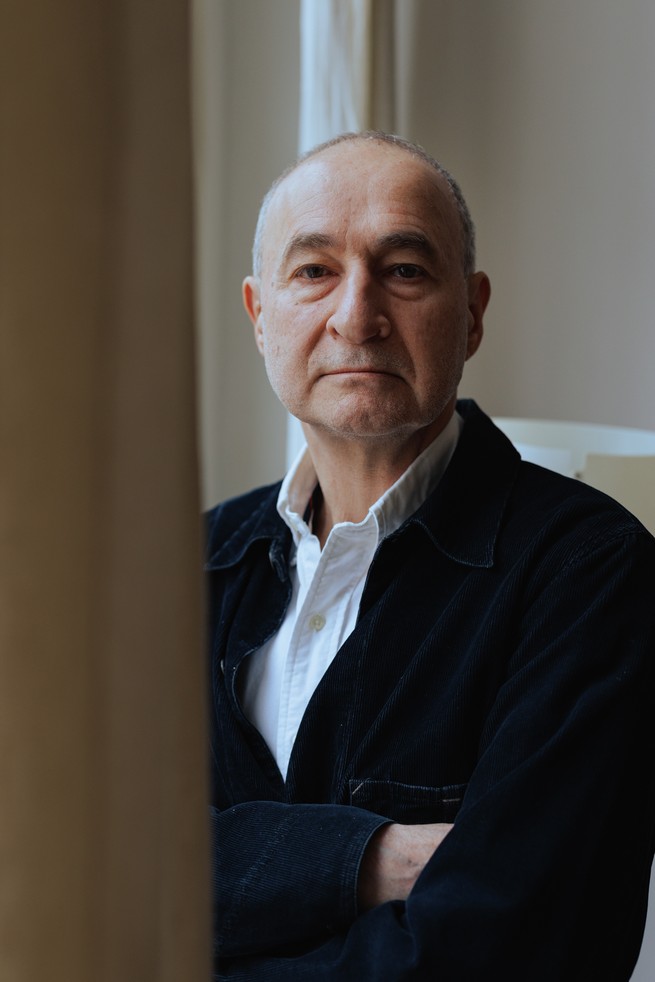
“It’s not a logical factor to equate anyone with a dying want at 25 and anyone with two weeks to dwell at age 80,” says psychiatrist Jim van Os, a critic of psychiatric euthanasia within the Netherlands.
The potential repercussions prolong past the Netherlands. As populations age and conventional faith loses affect, the demand for a proper to die is rising globally. Some type of doctor-assisted dying is now allowed in 12 international locations, and extra are prone to legalize it quickly. To date solely the Netherlands and Belgium commonly see instances of euthanasia for psychiatric causes, however the regulation in another international locations doesn’t rule it out. Canada, the place 16,499 individuals had been medically euthanized in 2024, is prone to begin allowing psychiatric euthanasia in 2027.
With 12 U.S. states and the District of Columbia permitting medical doctors to prescribe deadly medicine to terminal sufferers, and New York set to hitch them in June, Individuals even have one thing to be taught from the Dutch expertise. It means that the precise metaphor for the dangers of euthanasia shouldn’t be a slippery slope however a runaway prepare.
Supporters name Oosterhoff a savior; detractors take into account him a fanatic. Both manner, he appears the half. His face—framed by white hair, crisscrossed by age strains, and rendered unusually magnetic by unusually small, ice-blue eyes—has turn into the face of psychiatric euthanasia within the Netherlands.
That function was confirmed final fall when Dutch public tv broadcast Milou’s Battle Continues, the most-watched TV documentary of the yr. It tells the story of Milou Verhoof, a 17-year-old woman who acquired euthanasia from Oosterhoff to finish her psychological struggling.
As soon as the cheerful daughter of a well-to-do household, Milou was deeply shaken at age 11 by the near-fatal sickness of her beloved brother. At 13, she was raped and spiraled into post-traumatic stress, despair, and violent self-harm. At a safe in-patient facility, she was reportedly sexually abused once more, by a fellow affected person. She made a number of suicide makes an attempt and requested euthanasia, however psychiatrists demurred—till, in late 2022, her household contacted Oosterhoff after studying about him by way of the media.
Milou’s story may very well be instructed as an indictment of the Netherlands’ mental-health system, which failed a troubled, victimized teenager after which had nothing left to supply however medicalized dying. However the documentary—which was chosen as Dutch public tv’s entry for this yr’s Worldwide Emmy Awards—adopts the point of view of Oosterhoff and of the woman’s mother and father, who reward Oosterhoff for understanding their daughter’s struggling, respecting her autonomy, and sparing each her and them a lonely, undignified suicide. As Milou’s mom, Mireille Verhoof, put it in an e-mail to me: “Due to Dr. Oosterhoff’s extraordinarily cautious and cautious strategy, we as mother and father trusted that his conclusion—that Milou actually couldn’t go on and that the times had been unlivable for her—was the one right one and confirmed what we as mother and father had lengthy seen in our baby.”
Earlier than dying, Milou obtained her nails achieved and picked out a night robe and excessive heels to put on in her coffin. On October 2, 2023, Oosterhoff gave her a deadly injection in her childhood bed room. “Lady, have journey,” he instructed her, as her mom and father regarded on. “You’ve been by way of a lot.” Oosterhoff spoke at her funeral.
In April 2024, 14 psychiatrists and medical doctors wrote to the Dutch public prosecutor to lift considerations about Milou’s case, together with the way in which Oosterhoff publicized it. Two months earlier than he euthanized her, Oosterhoff recorded a video dialog with Milou about her want to die. After her dying, he posted it on the web site of the KEA Basis, which he established to assist psychiatric euthanasia and to encourage extra psychiatrists to carry out it.
The medical doctors’ letter recommended that Oosterhoff’s video exploited Milou, who, they wrote, “might not have been totally decision-competent to evaluate her personal proper to life or adequately safeguard her care wants in a state of affairs of acute misery.” The Dutch newspaper NRC revealed a transcript of a part of the video, during which a despondent Milou says, “I’d have preferred to have had one other life, however that was not granted to me.” Oosterhoff then asks how she would reply to those that would possibly say, “Sure, however you’re nonetheless so younger.” Milou solutions, “It’s not about age; it’s concerning the struggling.” Oosterhoff replies with an approving murmur. Milou continues, “I attempted every part I might to make it higher,” as Oosterhoff nods.
The medical doctors despatched their letter privately and didn’t explicitly request a felony investigation, however when Oosterhoff discovered about it he fired again within the media, demanding that the letter’s authors apologize. They refused. To this present day, he’s livid, insisting that every part he did was in line with the regulation and that, as he places it, “Milou wished consideration for her state of affairs.” Oosterhoff’s basis has since eliminated the video from its web site however he insists that it “accommodates nothing controversial that I would want to cover.” (He declined my request to see the video, telling me it has since been destroyed.)
Oosterhoff has some extent. The entire euthanasias he carried out had been reviewed after the actual fact, as a matter of ordinary process, by the Netherlands’ Regional Euthanasia Assessment Committees (identified by the Dutch initials RTE), and his conduct handed muster. With out a discovering of fault from the RTE, prosecutors would have been not possible to start out a felony investigation into Milou’s case.
The RTE, nonetheless, was designed on the idea that it might must assessment a reasonable variety of comparatively clear instances—not the 1000’s of euthanasias, together with psychiatric ones, now flooding the system. RTE panelists don’t conduct unbiased investigations however depend on physicians’ written stories, augmented in just a few instances by further questioning. Oosterhoff says the RTE known as him in to debate Milou’s case due to her younger age.
As a sensible matter, medical doctors have little to worry from the RTE. From 2002 to 2024, it discovered that physicians failed to satisfy the entire “due care standards” in simply 144 out of 110,591 euthanasia instances, together with 14 of the 1,123 psychiatric-euthanasia instances. Of those, prosecutors took precisely one case to courtroom. Marinou Arends confronted homicide fees for allegedly euthanizing an unconsenting aged affected person in 2016. She was acquitted and later made a knight within the Order of Orange-Nassau, in recognition of her profession as a geriatric doctor.
Whatever procedural checks and balances encompass euthanasia within the Netherlands, the system essentially depends on a person doctor’s judgment as the last word safeguard. And to spend time with Menno Oosterhoff is to grasp vividly that there is no such thing as a such factor as a purely skilled judgment on euthanasia. His strategy appears to replicate his idiosyncratic, still-unfinished religious journey as a lot as his medical coaching or experience.
Jagoda Lasota
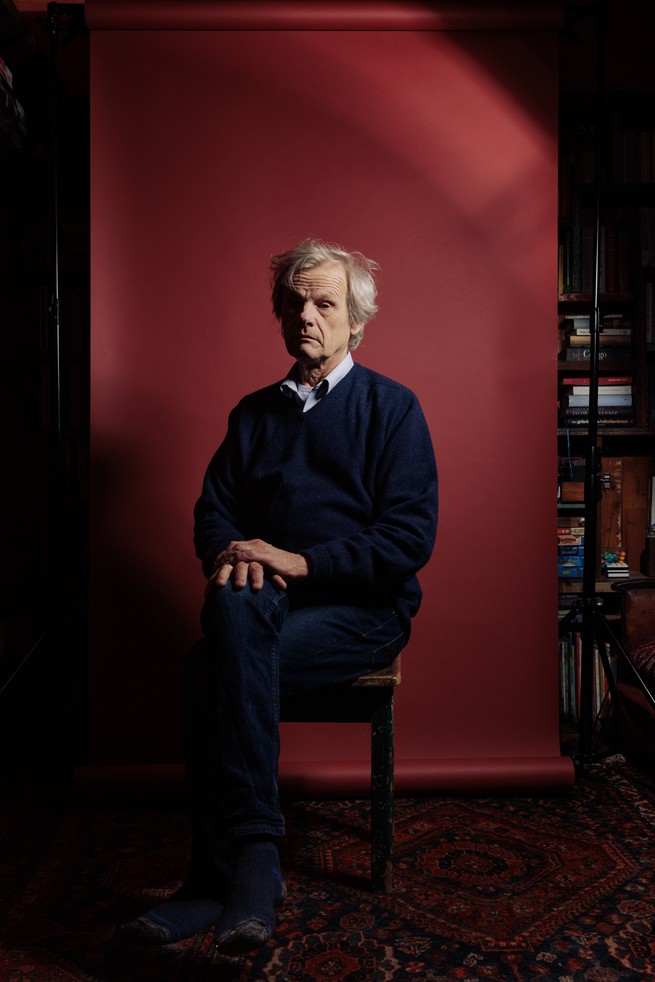
Menno Oosterhoff at his house.
Born in 1955 right into a family the place God was a looming presence and the afterlife an on a regular basis concern, Oosterhoff was a teen when he watched his beloved father waste away from most cancers. In his e book, Oosterhoff recounts feeling responsible for hoping his father would die, and relieved when dying ended his struggling. Six years later, his older brother additionally died after a painful sickness.
Across the time of his father’s dying, Oosterhoff was identified with obsessive-compulsive dysfunction, which he now controls with the assistance of medicine. At his house—a comfortable hobbit gap of a spot within the northern Dutch village of Thesinge, effectively stocked with art work, houseplants, and canine beds—he instructed me how the situation influences him. “OCD,” he stated, “means you might be hyperaware of the existential issues of life: dying, accountability, loneliness, the aim of all of it.” This led to his curiosity in drugs, as a result of it gave him “a really sturdy conscience.” He turned a specialist in treating sufferers with OCD.
Whereas he was in medical college within the Nineteen Eighties, Oosterhoff left Christianity for anthroposophy, the “religious science” based by the Twentieth-century Austrian thinker Rudolf Steiner, which teaches that the collective human spirit evolves by way of the reincarnation of particular person souls. Unable to overcome his doubts about that concept, Oosterhoff ultimately soured on anthroposophy too. However he retained his personal model of one other anthroposophical doctrine: that morality consists find a steadiness between equally damaging extremes, not obeying absolute imperatives.
He views euthanasia as a center path between two evils: on the one hand, permitting a affected person’s struggling to proceed, and on the opposite, inflicting an pointless dying. “Not giving euthanasia has penalties too,” Oosterhoff instructed me repeatedly, nearly like a mantra. One consequence, he says, is that “mentally terminal” individuals would possibly finish their lives on their very own, impulsively or violently.
For Oosterhoff, the concept that psychiatric euthanasia reduces the danger of suicide is likely one of the strongest rationales for making it accessible. But scientific proof for this idea is scant. From 2020 to 2024, as psychiatric euthanasia reached new heights amongst Dutch younger individuals, the suicide charge for these ages 10 to 30 additionally hit twenty first century highs of 8.8 per 100,000 males and 4.7 per 100,000 for girls. Suicide is the main reason behind dying for this age group.
Gender is one other worrisome subject. Within the Netherlands, twice as many ladies as males try suicide, however solely half as many full the act, as a result of girls have a tendency to make use of much less violent and fewer reliably lethal strategies. The supply of euthanasia, a assured methodology, thus makes it extra probably that suicidal girls and ladies will die. Of the 30 individuals underneath age 30 who acquired psychiatric euthanasia in 2024, 25 had been feminine.
Oosterhoff concedes that psychiatric diagnoses and prognoses are inherently much less sure than these of bodily diseases. “The scientific foundation of psychiatry continues to be very, very unclear,” he stated. “A number of issues individuals say are simply primarily based on nothing.” However to him, this doesn’t imply that psychiatrists ought to chorus from making life-or-death judgments. Moderately, they need to forge forward, guided by their good intentions and by a affected person’s autonomous will. Psychiatrists, he stated, are skilled “to assist individuals to not lose hope and to seek out sparks of sunshine and so forth. However is that trustworthy advert infinitum? Or is there a second that you just say, ‘That’s the opinion of this particular person themselves. My opinion is not any higher’?”
His euthanasia sufferers’ reactions, as Oosterhoff remembers them, vindicate his strategy. “The gratitude for what I did is so immense typically,” he instructed me, emotion thickening his voice. Two days after ending Milou Verhoof’s life, Oosterhoff euthanized David Mulder, a 31-year-old man with power despair. As he ready the deadly injection, Oosterhoff recalled, Mulder instructed him, “You’re my hero.”
What defenders of psychiatric euthanasia fail to acknowledge is that “persons are all the time ambivalent concerning the dying want,” Koos Neuvel, the editor in chief of the Netherlands Journal of Literature and Drugs, instructed me. This was the conclusion he drew from interviewing quite a few sufferers with psychological sickness who had thought of euthanasia, for his new e book on the topic, Lastly at Peace.
Neuvel turned a critic of the Dutch mental-health system after witnessing the experiences of his teenage daughter, Nora, who suffered from extreme anorexia. Regardless of years of psychiatric remedy, she lastly died of hunger after refusing to eat or drink. At the moment Neuvel is one in all a small however rising variety of Dutch journalists difficult the media’s portrayal of psychiatric euthanasia. “It’s all the time offered in the identical manner: that it’s an vital factor to do and it’s mandatory for the physician to cooperate with this and that the dying want can’t be modified,” he stated.
In 2024, the psychiatrist Mascha Mos posted one such story on a medical weblog, about administering euthanasia to “a 34-year-old man with OCD, despair, later-diagnosed autism, tinnitus, and persona issues.” For a distraction whereas she inserted the needle, he watched a online game in demo mode. “I image him mendacity on his sofa, with Grand Theft Auto taking part in within the background, in his neat, tidy, darkened house,” Mos wrote. “What a courageous and heartbreaking resolution he made to request euthanasia. And the way courageously he adopted the method, contemplating his issues.”
To Neuvel and different critics, such portrayals romanticize euthanasia for psychological sickness, making a threat of social contagion. That concern is shared by the Euthanasia Experience Middle, a company within the Hague that makes a speciality of facilitating doctor-assisted dying for sufferers whose common physicians can’t or is not going to carry out it. In December, the middle issued a press release noting that it “noticed a spike in registrations” after each constructive media story about euthanasia. It warned that public perceptions “didn’t match actuality: for less than a really small variety of younger individuals with psychological struggling is euthanasia presumably the perfect end result.”
What younger sufferers actually need from psychiatrists, Neuvel believes, isn’t assist with dying however causes to maintain dwelling. “Even when the affected person has misplaced all hope, the medical doctors shouldn’t hand over hope,” he stated. “There’s all the time one thing individuals need to dwell for, that they discover attention-grabbing.”
Lisa Tiersma, a 27-year-old graduate scholar in Utrecht, was handled for 10 completely different psychiatric diagnoses as an adolescent, together with a two-year hospitalization. She tried suicide, feeling her remedies had been going nowhere. What saved her going by way of her worst instances, Tiersma instructed me, was her dream of learning music. At the moment she teaches piano and performs authentic compositions. Her music “Assist Me,” an exploration of her struggles with psychological sickness written underneath the stage identify Left Lynx, earned a prize within the 2022 European Songwriting Awards.
Jagoda Lasota for The Atlantic
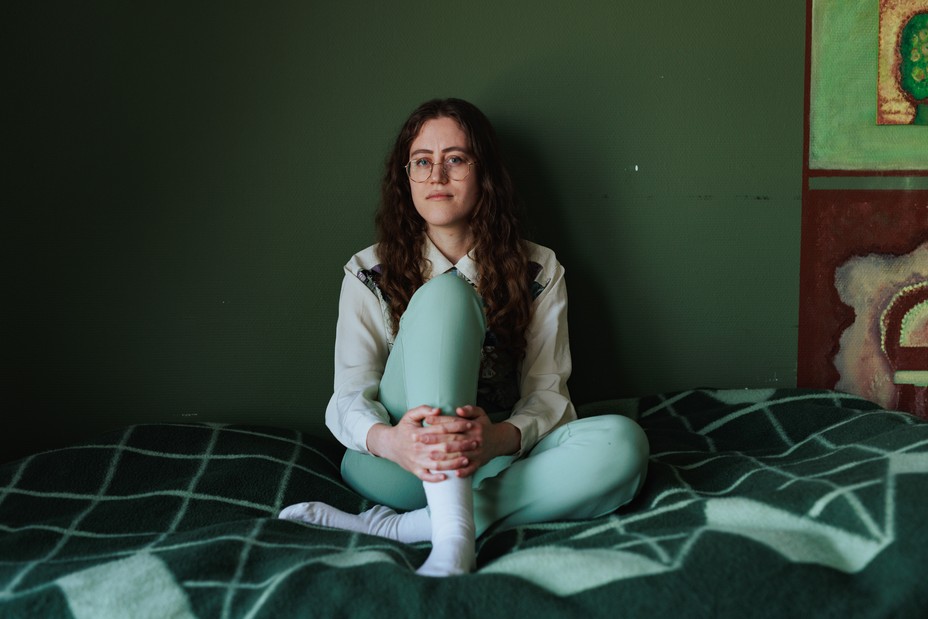
“I wouldn’t say I’m totally recovered,” says Lisa Tiersma, 27, who tried suicide as a teen. “However I do have a function, a will to dwell. And I believe that’s what issues in the long run.”

Jagoda Lasota for The Atlantic
Tiersma’s dream of learning music saved her going by way of darkish instances. She is now an award-winning songwriter.
“I wouldn’t say I’m totally recovered,” she stated, “however I do have a function, a will to dwell. And I believe that’s what issues in the long run.” Final yr, Tiersma’s psychiatrist, presumably probing for suicidal tendencies, requested her what she thought of euthanasia. She instructed me the query struck her as “planting a seed, nevertheless it’s not the proper of seed.” Her personal expertise had taught her that staying hopeful will be laborious. “However that’s nonetheless not a purpose to surrender,” she stated.
The final concern for Dutch critics of psychiatric euthanasia is that dying will turn into simply one other remedy choice in a mental-health system tormented by lengthy waits for typically insufficient care. In 2025, the Euthanasia Experience Middle and Basis 113, a suicide-prevention group, surveyed almost 400 younger individuals who had sought euthanasia. Practically all reported damaging experiences with Dutch youth care or mental-health providers.
But Oosterhoff and like-minded colleagues have campaigned for even lighter regulation of doctor-assisted dying. Ideally, they are saying, a affected person would have the identical psychiatrist by way of a complete “euthanasia trajectory,” from scientific remedy to deciding to die to the deadly injection. As issues now stand, many psychiatrists balk at administering dying to sufferers with whom they’ve established remedy relationships. Thus these intent on being euthanized “doctor-shop” for somebody who will do the job.
Few critics of psychiatric euthanasia suggest that the Netherlands ban it utterly. As a substitute they advocate for reforms, similar to the next minimal age and extra sturdy oversight by the RTE. For now, such modifications appear unlikely. In 2025, the New Social Contract get together proposed a three-year moratorium on euthanasia for psychological sickness of individuals underneath 30; the Dutch Parliament voted it down.
D66, the socially liberal get together that spearheaded the euthanasia regulation 1 / 4 century in the past, opposed the decision. “By proposing a moratorium you chop away on the basis” of authorized euthanasia, D66 Parliamentarian Wieke Paulusma stated. She faulted moratorium advocates for second-guessing “well-educated professionals who’re constantly deliberating.” The Dutch legislature did vote for extra analysis into the problem, although D66, now the Netherlands’ ruling get together, opposed that as effectively.
There’s a greater probability that the Dutch Psychiatric Affiliation will toughen its tips on euthanasia, which it’s at the moment reviewing, together with a minimum-age requirement. That might lack the power of regulation however might form requirements {of professional} accountability. In December, Accare, a Dutch mental-health middle for individuals youthful than 23, introduced that “as a rule we don’t present euthanasia to minors and younger adults.”
However “a authorized age restrict, such because the one Belgium applies at eighteen, is a delicate topic within the Netherlands,” a current NRC article defined. In spite of everything, saying psychiatric euthanasia for younger individuals must be prevented sooner or later implies that it ought to have been prevented up to now. That might replicate badly on much more individuals than simply Menno Oosterhoff. Defenders of the precise to die, van Os stated, “can’t be nuanced about it, as a result of they really feel the entire euthanasia home will crumble.”
Oosterhoff’s personal profession as a euthanasia supplier might be over. In March 2025, he let his medical license expire, so he can now not deal with sufferers or finish their lives. After two years of textual content messages and telephone calls from euthanasia seekers, he was burned out; he instructed one TV interviewer that he felt like a physician working in Gaza.
Oosterhoff instructed me he has no regrets. In relation to the deaths he has administered, he appears to inhabit a separate, self-contained moral universe during which he has used all of his expertise, mind, and erudition to rationalize—efficiently, in his view—the taking of youthful life. “Morality,” he instructed me repeatedly, “shouldn’t be nervousness for punishment however enthusiasm for the great.”
Throughout our dialog, he appeared to waver solely as soon as, once I requested concerning the threat to society if psychiatry endorses the notion that psychological struggling will be as hopeless as end-stage lung most cancers. Wouldn’t that be damaging in a world the place individuals with psychological sickness already battle to seek out function? “What is sweet for one affected person will be unhealthy for the entire neighborhood—that’s a really troublesome factor,” Oosterhoff acknowledged. In performing euthanasia, he stated, he regarded “to the person affected person,” including that public coverage is “not my work.”
Musing about unintended penalties, Oosterhoff talked about the parable of Pandora’s field and Goethe’s story of the sorcerer’s apprentice. And he introduced up Aktion T4, the Nazi program during which German psychiatrists euthanized kids and adults with psychological sickness and different disabilities. That shocked me: The victims of Aktion T4 had been utterly uninformed and unconsenting, an important distinction with psychiatric euthanasia within the Netherlands, as Oosterhoff famous.
Listening to Oosterhoff, nonetheless, I noticed that the distinction between the 2 applications shouldn’t be absolute. Euthanasia sufferers within the Netherlands make the selection to die—however when a teen is affected by psychiatric sickness, can that selection actually be thought of an expression of autonomous will? The rationale for euthanasia in Nazi Germany was racial hygiene; within the Netherlands as we speak, it’s autonomy and compassion. However Dutch physicians who carry out euthanasia additionally settle for the precept that some lives are higher not lived. “I’m shocked that so many psychiatrists and nurses labored with Aktion T4,” Oosterhoff stated. “Then, in fact, I believe, What am I doing? How will the longer term decide about me? I don’t know. I solely can say I did what I believed I ought to do.”